Speak with an Expert

In this 15-minute call, discuss your product vision, timeline, and any questions about scope or budget.

Obodo

Research estimator

2 min
Up to 80% cheaper than an agency study

Enterprise Grade Research. Without Enterprise Costs.

One agency study can run £8k–£20k. Obodo delivers a complete study each cycle for up to 80% less.

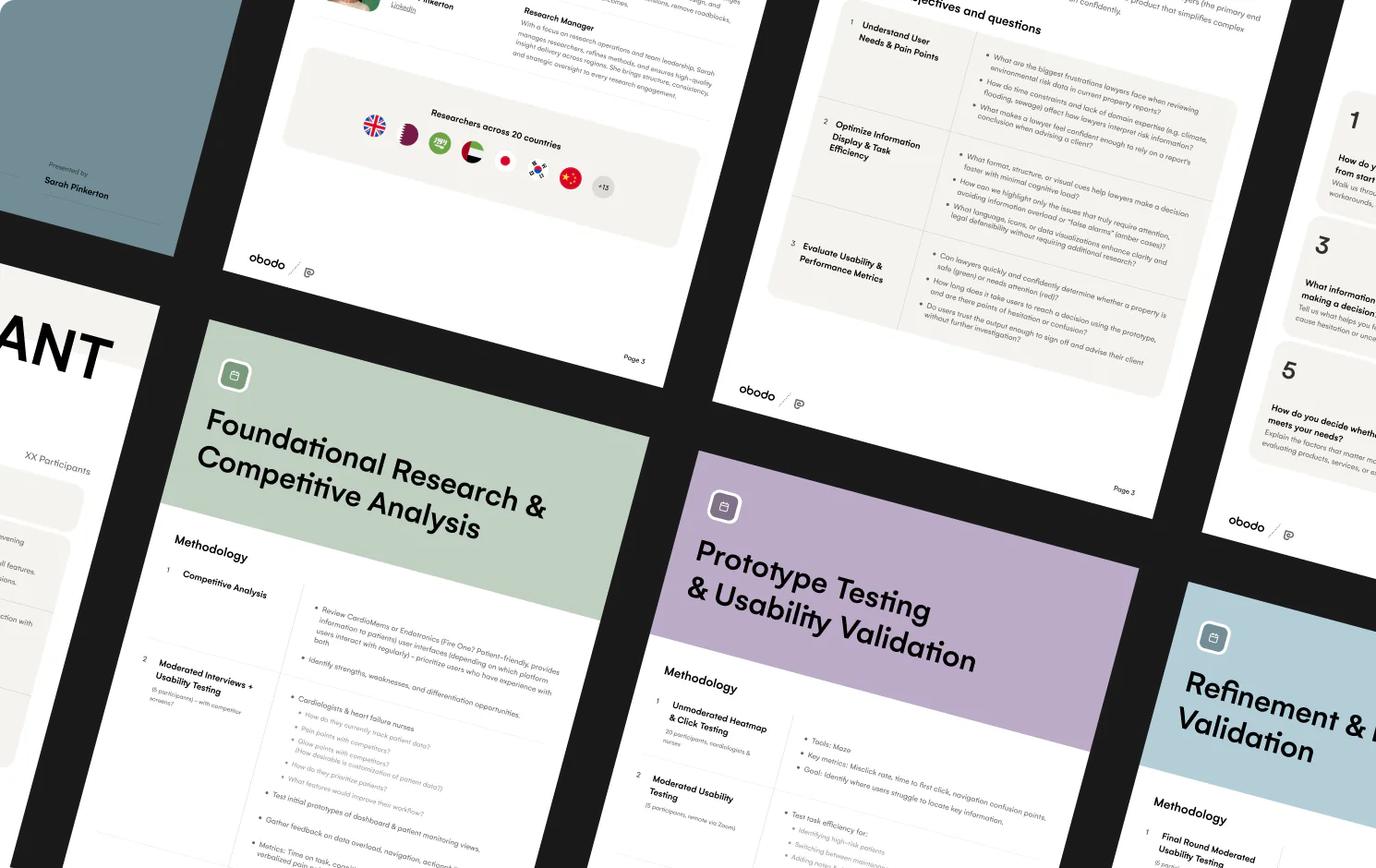
A spread of research deliverables: a researcher bio slide, a map of researchers across 20 countries, discussion-guide objectives and questions, and phased methodology slides for competitive analysis, prototype testing and refinement.
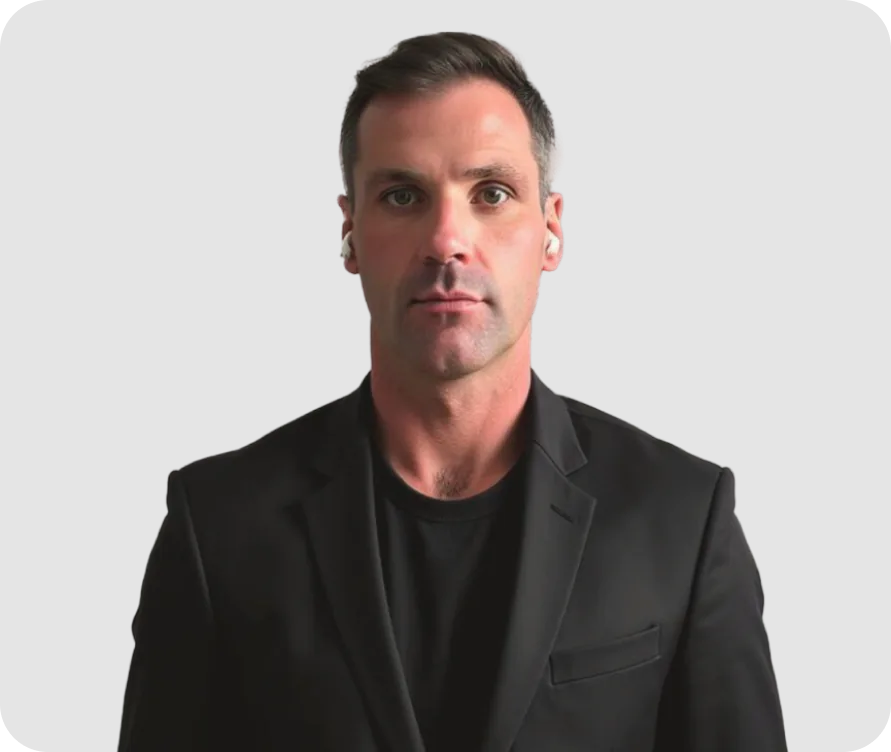
Sarah Pinkerton, one of Obodo's researchers.
Sarah Pinkerton User Researcher
Why Obodo

What makes us different?

  • Senior researchers, AI-accelerated delivery
  • Every session is human-moderated, never automated
  • Full refund if your completed study isn't right
Learn more
Previous clients
  • MIT
  • M&S
  • next
  • Precision Cardiovascular
  • RAC
  • NHS
  • Victoria's Secret
Solutions

What do you need to decide?

Product Research
“What should we build, and will it actually work?”
Validate features and usability before you build.
Customer Research
“Who are our users, and what do they need?”
Understand the people you're building for.
Market Research
“Should we enter this, and where's the opening?”
Size the market before you commit.
Brand & Communications
“Is our message landing with our audience?”
Test how you're seen and what you say.
Case studies

Our research work

Nothing ever seems too much, and the quality of their output speaks for itself. I'm genuinely grateful for it.
Paul H. Lead UX Researcher
Play Video
Workshops

What makes us different

AI

Always Human Moderated

Moderation is always human. We never automate it.

Learn more
Value

Up to 80% Cheaper

A complete study each cycle, for up to 80% less than a traditional agency.

Learn more
Speed

Live in Days, Risk Free

Up and running in days. Full refund if your completed study isn't right.

Learn more
Expertise

AI Accelerated Experts

Senior researchers lead every study, with AI accelerating the work, never replacing it.

Learn more

63%

Faster turn around in end-to-end research studies with AI

Source: Maze.com survey (N=500)

Outcomes

How we use AI to accelerate UX research responsibly

Human moderation

Human moderation

Moderation is always human. Being in the session is the method, and we never automate it.

Make sense of it

Interpreting patterns and claiming insight is for human judgement. AI helps structure the reporting; the words and the story stay ours.

Plan

AI proposes methods, screener criteria and discussion-guide drafts; we decide the approach, choose who to recruit, and vet every question ourselves.

Gather

Gather

AI accelerates desk and competitive research, handles transcription and first-pass coding; we cite and verify every source, and spot-check everything against the audio.

How we use AI

Watch how AI fits into our research

Solutions

Research for every decision

Product Research

Concept Testing

Test the idea with real users before you build it.

What it is

Put early concepts, prototypes or messaging in front of your target audience to see what resonates and what falls flat, before engineering starts.

When you need it

Choosing between directions, or de-risking a bet before roadmap lock.

What you'll get

A clear read on demand and preference, with a recommended direction.

How we do it

Qual interviews + focus groups, light quant where useful, with recruited participants. Typical timeline: 1–2 weeks.

Product Research

UX Research

Find exactly where users get stuck, and what to fix first.

What it is

Watching real users work through your product to find where they hesitate, backtrack or give up.

When you need it

Conversion or retention is slipping and you need to know which step is causing it.

What you'll get

A prioritised list of usability issues, each tied to the evidence behind it.

How we do it

Moderated usability sessions with your own users, plus a task-level severity review. Typical timeline: 2–3 weeks.

Product Research

Conversion Rate Optimisation (CRO)

Remove the friction that's costing you conversions.

What it is

Finding and removing the friction between someone arriving and someone converting.

When you need it

Traffic is healthy but sign-ups, checkouts or demo bookings are not.

What you'll get

A ranked set of friction points, with the changes we would test first.

How we do it

Funnel analysis, session review and usability testing on the drop-off steps. Typical timeline: 2–3 weeks.

Customer Research

Persona Research

Real segments based on data, not internal opinion.

What it is

Segmenting your users on what they actually do and need, rather than on internal assumptions.

When you need it

Teams disagree about who the product is for, or targeting is spread too thin.

What you'll get

Evidence-based segments with the behaviours, goals and blockers that separate them.

How we do it

Depth interviews to find the segments, then a survey to size them. Typical timeline: 3–4 weeks.

Customer Research

Customer Loyalty Research

Understand what keeps customers, and what makes them leave.

What it is

Understanding what keeps customers with you, and what pushes them to leave.

When you need it

Churn is climbing, or renewals are flat and nobody can say why.

What you'll get

The drivers of loyalty, and the specific moments where customers disengage.

How we do it

Interviews with both retained and churned customers, plus a driver analysis. Typical timeline: 3–4 weeks.

Customer Research

Pricing Research

Find what the market will actually pay.

What it is

Testing what the market will actually pay, and how packaging changes that.

When you need it

Ahead of a launch, a repackaging, or a price rise you cannot easily undo.

What you'll get

Willingness-to-pay ranges by segment, with a recommended price and package.

How we do it

Price-sensitivity and trade-off exercises with qualified buyers. Typical timeline: 3–4 weeks.

Customer Research

Customer Satisfaction

Track satisfaction and find the friction hurting retention.

What it is

A repeatable read on how satisfied customers are, and what is hurting retention.

When you need it

You need a measure you can track over time, not a one-off snapshot.

What you'll get

A satisfaction baseline, the friction behind it, and a survey you can rerun.

How we do it

CSAT and NPS instrumentation, followed by interviews with detractors. Typical timeline: 2–3 weeks to set up.

Market Research

Go-to-Market Research

Validate the launch plan before you spend on it.

What it is

Pressure-testing the launch plan, audience, positioning and channel, before you spend on it.

When you need it

A launch date is set and budget is about to be committed.

What you'll get

A validated audience and message, with the channels most likely to reach them.

How we do it

Buyer interviews, competitor and channel review, then message testing. Typical timeline: 3–4 weeks.

Market Research

Market Feasibility Study

Find out if the opportunity is commercially viable before you commit.

What it is

Sizing an opportunity and checking it is commercially viable before you commit to it.

When you need it

Entering a new market, category or region.

What you'll get

Market size, demand evidence, the competitive picture and a go/no-go recommendation.

How we do it

Desk research, expert interviews and demand testing with target buyers. Typical timeline: 4–6 weeks.

Brand & Communications

Brand Awareness

See how visible and memorable your brand really is.

What it is

Measuring how visible and memorable your brand is against the set you compete with.

When you need it

Before and after a campaign, or when you need a baseline to argue from.

What you'll get

Aided and unaided awareness, and what your brand is associated with.

How we do it

A quantitative survey against a representative sample of your market. Typical timeline: 3–4 weeks.

Brand & Communications

Brand Tracking

Watch your brand move over time and know what's driving it.

What it is

The same measures run on a schedule, so you can see the brand move over time.

When you need it

You are investing in brand and need to show what that investment is doing.

What you'll get

A trend on awareness, consideration and perception, with the drivers behind each move.

How we do it

A repeating wave survey on a fixed sample frame. Typical timeline: ongoing, first wave in 4 weeks.

Brand & Communications

Message Testing

See what your messaging does before you spend on it.

What it is

Putting your messaging in front of the audience before you spend on distributing it.

When you need it

Choosing between propositions, or rewriting a page that is not landing.

What you'll get

The messages that land, the ones that do not, and why.

How we do it

Comparative message tests with short qualitative follow-ups. Typical timeline: 1–2 weeks.

Product Research

Feature Prioritisation

Find which features your users value most, before you build them.

What it is

Putting your candidate features in front of real users and forcing the trade-offs, so you learn what they'd actually choose rather than what they'd nod along to.

When you need it

The roadmap is longer than the quarter, stakeholders disagree, or a feature request keeps winning on volume rather than value.

What you'll get

A ranked list of features by value to each segment, with the trade-offs users are and aren't willing to make.

How we do it

A MaxDiff or conjoint survey with your users or a recruited sample, plus short follow-up interviews on the surprises. Typical timeline: 2–3 weeks.

Customer Research

Customer Journey Research

See the whole path your customers take, and where it breaks.

What it is

Mapping every step a customer takes with you, from first contact to renewal, to find the moments that build loyalty and the ones that lose people.

When you need it

Handoffs between teams are dropping customers, or nobody can say where the experience actually fails.

What you'll get

A journey map by segment with the pain points, emotions and moments that matter, ranked by impact.

How we do it

Depth interviews and diary studies with your customers, plus a review of your own journey data. Typical timeline: 3–4 weeks.

Customer Research

Ethnographic Research

See what customers actually do in their own environment, not what they say they do.

What it is

Observing people in the places they live and work, in person or through their own phones, to understand the habits, workarounds and unmet needs no survey will surface.

When you need it

You're entering unfamiliar territory, the numbers don't explain the behaviour, or you need to see the context before you design for it.

What you'll get

Behavioural themes and unmet needs, with the video and photo evidence behind them and the opportunities they point to.

How we do it

Contextual visits, shadowing and mobile diary tasks with recruited participants, then structured synthesis. Typical timeline: 3–5 weeks.

Market Research

Competitive Landscape

Know exactly where you stand against the brands you lose to.

What it is

Understanding how buyers see you against the set you compete with, why they choose one over another, and where the gaps are.

When you need it

Deals keep going to the same competitor, positioning feels crowded, or you're deciding where to differentiate.

What you'll get

A map of the competitive set on the attributes buyers actually use, why you win and lose, and where to play.

How we do it

Win/loss interviews with recent buyers, a perception survey against your competitor set, and a review of competitor positioning. Typical timeline: 3–4 weeks.

Brand & Communications

Campaign Effectiveness

Find out what your campaign actually moved.

What it is

Measuring what a campaign did to awareness, recall, message take-out and consideration among the audience it was meant to reach.

When you need it

Budget is going into a campaign and you need more than impressions to show for it, or you're choosing between creative routes for the next one.

What you'll get

The lift in awareness and consideration, which messages landed, and what to change before the next spend.

How we do it

Pre- and post-campaign surveys against a matched sample, with a qual read on the creative where useful. Typical timeline: two waves, 2 weeks each side of the campaign.

How it works

The research process

How we work

Work with a senior researcher and your team to run your first study.

Research Plan & Pricing

Answer a few quick questions about your brief and get an indicative price and research plan, then firm both up on a 30-minute scoping call with a senior researcher.

Generate Price
Price
Free
Duration
2-minute setup online
Scoping call
A 30-minute call with your senior researcher before any study starts
Size
Your team + your researcher
Location
Online setup, video call to discuss
Outcome
Your research plan and an indicative price, then a fixed price once you've had the call.

First Study Pilot

Run one study with us, quant or qual, based on your research plan. If you're not happy with the results, it's a full refund, your call.

Price
Login to see pricing
Scope
Quant or qual, scoped to your research plan
Recruitment
Sourced via Respondent.io, or bring your own participants
Location
Remote, with direct access to your researcher throughout the study
Outcome
A completed study, delivered against your agreed plan.
Management

Our research team

Charles Engelen Charles Engelen Head of Research
  • Research Strategy
  • Qualitative Research
  • Stakeholder Alignment

Leads our research practice, turning ambiguous problems into evidence-backed decisions.

View LinkedIn
Brad MacDonald Brad MacDonald User Researcher
  • Qualitative Research
  • Operational Research
  • Workshops

Senior UX researcher specialised in qualitative research and operational research.

View LinkedIn
Sarah Pinkerton Sarah Pinkerton User Researcher
  • Interviews
  • Behavioral Research
  • Insight Synthesis

Experienced user researcher specialised in interviews, behavioral research, and insight synthesis.

View LinkedIn
Good to know

FAQ

Methodology & Rigour

What methods do you use, and who decides what fits my question?

There's no fixed package: we mix and match methodologies and shape each study around the decision you're making. Your senior researcher recommends the right approach as part of your research plan.

How much AI is involved, and who verifies it?

AI helps plan and gather: drafting methods and screener criteria, handling desk research, transcription and first-pass coding. Moderation is always human, and every AI-assisted source is cited and verified before it reaches your report.

Can I see a sample report before I commit?

Yes, sample reports and study prices are available before you commit to a study.

Global talent

Access our network of researchers across 20 countries

Case study

Video

Good to know

FAQ

Methodology & Rigour

What methods do you use, and who decides what fits my question?

There's no fixed package: we mix and match methodologies and shape each study around the decision you're making. Your senior researcher recommends the right approach as part of your research plan.

How much AI is involved, and who verifies it?

AI helps plan and gather: drafting methods and screener criteria, handling desk research, transcription and first-pass coding. Moderation is always human, and every AI-assisted source is cited and verified before it reaches your report.

Can I see a sample report before I commit?

Yes, sample reports and study prices are available before you commit to a study.

Pricing & the Guarantee

Is the price after the intake form final?

No, it's an indicative price. A 30-minute scoping call with your senior researcher — required before any study — firms up the brief, and the proposal you approve fixes the price.

What does the guarantee actually cover?

If you're not happy with the completed study, it's a full refund. It's your call, with no dispute process to go through.

Recruitment

Do I get to approve who's recruited for my study?

Yes, every participant is shared with you for approval before the study begins, whether sourced via Respondent.io or your own list.

Can I mix my own participants with Respondent.io-sourced ones?

Yes, you can combine both in the same study.

What if recruitment is delayed or falls through?

Since the guarantee is based on your own satisfaction with the final results, recruitment issues that affect the outcome fall under the same money-back guarantee.

Scope & Process

What exactly counts as "one study"?

Exactly what's defined in your signed-off research plan, no more, no less.

How long does a study take, start to finish?

It depends on the methodology and recruitment your study needs, both of which are set out in your research plan, so you'll know your timeline before you commit.

Is there a follow-up workshop after delivery?

Yes, after your reports and assets land in your dashboard, you'll book a follow-up workshop with your researcher and team within a week to work through what the results mean for you.

Comparison to Alternatives

How is this different from hiring a freelance researcher directly?

Freelance quality can vary, and context gets lost between projects. With Obodo, a senior researcher owns your project throughout, from your research plan to your final report, so nothing gets lost along the way.